
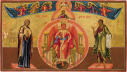
Utopian Scholastic Aesthetic: Where Learning Meets Wonder
A reflection on how beauty, curiosity, and imagination make learning a sacred act.

Over the last few months, I’ve had the opportunity to visit several museums and similar attractions. As someone who studies the atmosphere of interior design and its philosophical significance, I realized that cultivating atmosphere and aesthetic effects is crucial to the museum experience. Moreover, this is a fascinating case in which one can clearly see a link between the aesthetics of the atmosphere and how that atmosphere is used to contextualize and influence education and learning.
To begin with a personal example, this summer, I visited the Museum of Science and History in Fort Worth, Texas. This is a museum that I used to visit all the time when I was a kid and even into high school. My mom would often take me, and I even spent a little time in their “museum school,” which was like a little day camp for kids to learn more about science. As I recall (and I double-checked my memory with my mom to make sure it wasn’t just childhood nostalgia), the atmosphere used to be a magical space, filled with wonder, whimsy, and a sense of discovery. I remember walking into the opening corridor and seeing a beautiful globe statue that sets the central location, with hallways leading to a planetarium exhibit, beautiful displays of dinosaurs and fossils, a discovery zone (focused on the physics of pulley systems, water flow, etc.), and their rotating special exhibit. And of course, they had a gift shop filled with dinosaur and space decor.
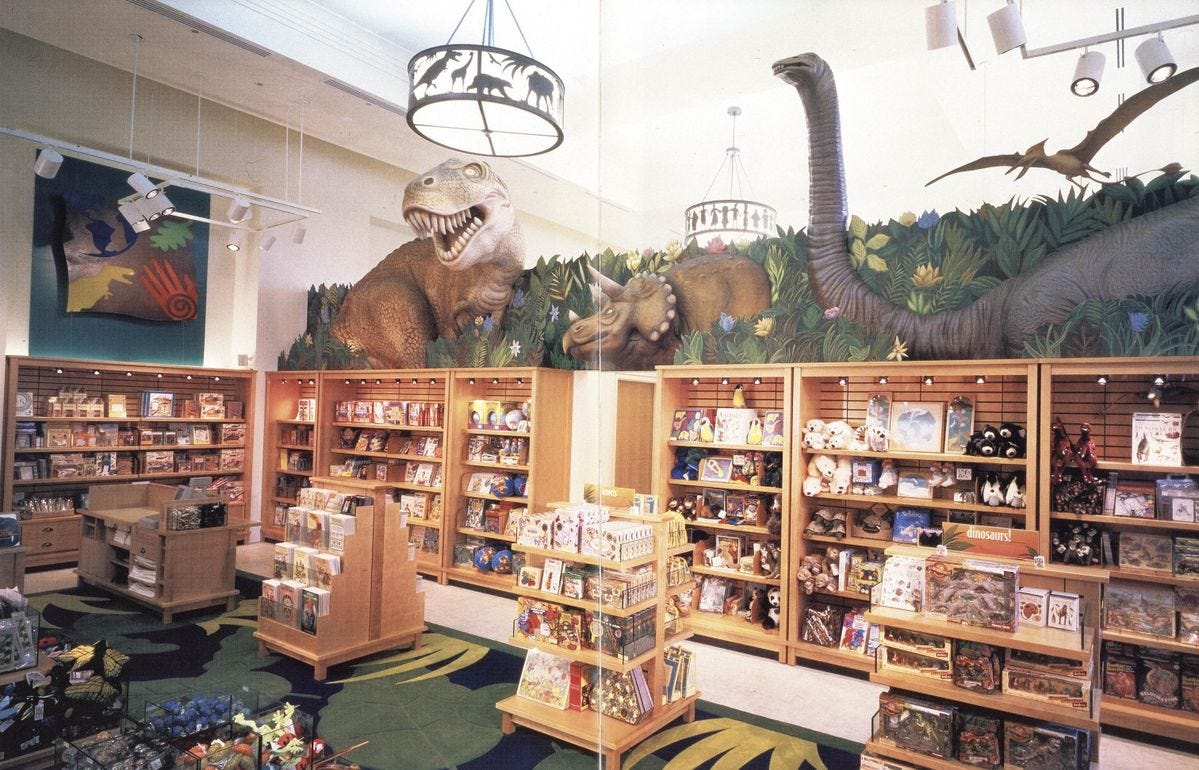
When I went this year, I was more than a little disappointed by their aesthetic. Instead of the whimsy and wonder of their museum atmosphere from years ago, it was replaced with the same grey box, white wall, corporate minimalism that is currently plaguing our culture. Dinosaur fossils were thrown onto the wall at random with no explanation. For example, there would be several tooth and finger bones with the Latin classification names on a small label against a white wall backdrop. Though I love dinosaurs, I don’t have all the names memorized, so I had to stop and google things to see what actual bones were on display. It really felt like the laziest museum design one could possibly construct.
The most egregious, however, was in their Native American exhibit. Half of the room was dedicated to the importance of buffalos in some Native American cultures. The information was mostly about the ecocide committed against the buffalo by white settlers. If you’re unfamiliar with this facet of history, I’ll briefly summarize. It was an exceptionally brutal and undeniably evil atrocity. The white settlers—in an attempt to commit genocide against the Native Americans, take their land, and win ongoing battles against the tribes—killed as many buffalo as they possibly could (which the indigenous tribes relied upon to live). So you have a case of horrendous ecocidal terrorism carried out for the sake of genocidal colonialism. This history is absolutely horrific, to the point where I struggle to wrap my mind around it. The museum exhibit gave a brief synopsis of the event, including an authentic picture of a man standing on a pile of buffalo skulls the size of a two-story school building.
On the wall next to this display was a giant, presumably real, taxidermy head of a buffalo. There was something so jarring about reading a short, frank description of such unjustifiable violence against both humans and buffalo, and then seeing part of the dead carcass of a buffalo on another wall next to it. Perhaps there is some sort of goal in this set up, but whatever goal there was got completely lost—especially when the only thing in the room was a random Native American blanket. The whole effect was something like: “In order to help their genocidal efforts, settlers slaughtered buffalo almost to the point of extinction. Here’s a dead buffalo head for context. Anyways, here’s a blanket.”
Thankfully, the entire experience was not terrible. They had an exhibit featuring the work of Jane Goodall that was fantastic, and I will talk about it more in a future post.
But the disappointment I felt set me on a path of thinking about the aesthetic contextualization of learning, and the aesthetic tools we have lost in that process.
Contexts of Learning: A Lost Art
My sad experience in these exhibits left a bad taste in my mouth. Something had been lost, and I felt like it wasn’t merely a sense of childhood wonder. I do my best to fuel my childhood wonder as much as I can, and other museums are capable of stoking that enchantment. I was finally able to put my finger on the problem when, whilst watching a video essay about aesthetics in the 2000s, I came across the term “utopian scholastic.” This is what I had been waiting for.


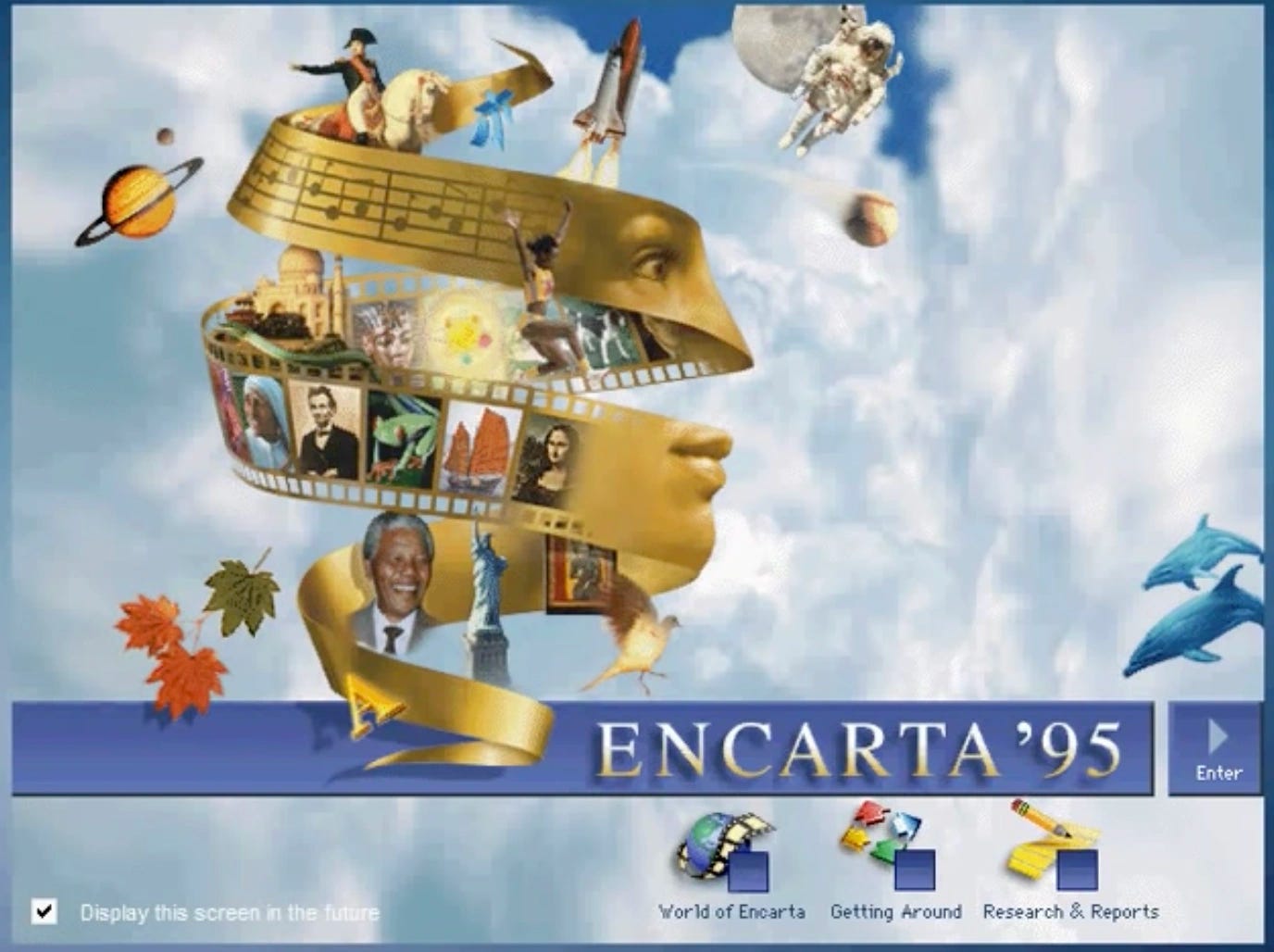
“Utopian scholastic” was an aesthetic phenomenon most prominent in the 1990s, eventually fading out of popularity in the early 2000s. The aesthetic is marked by a general mood of celebrating knowledge, curiosity, and the beauty of learning. Most often seen in educational material (textbooks and learning platforms) as well as in edutainment media, the aesthetic is noted for its calming, dreamlike surrealism. Clean. Warm. Inviting. Inspiring. Magical.
Common motifs include planets, animals, fossils, geometric diagrams, and classical architecture, evoking both science museums and illustrated encyclopedias. The mood is optimistic and reverent toward knowledge, portraying education as a pathway to harmony between humanity, nature, and the cosmos.
This was also the same vibe and aesthetic that gave us some of the most iconic forms of edutainment (educational entertainment): The Magic School Bus, Bill Nye the Science Guy, Reading Rainbow, Zoboomafoo, Blues Clues, and Captain Planet (more on the Captain in a future blog post!).
Seeing this aesthetic again online was like traveling back in time. The memories came rushing back to me. But of course, this nostalgia was met with lament, as this finally was able to put into words what felt so “off” about my current context.
Rest assured, I am fully aware that nostalgia—particularly childhood memories—is prone to color the past with rose-colored lenses. Not everything was a utopia during the days of utopian scholasticism. However, it seems to me that something about the more noble ideals and goals of utopian scholastic aesthetic has been lost within the contemporary era of corporate minimalist nihilism (which I have written about extensively here). In what follows, I will attempt to elucidate those goals and articulate a theological perspective on the aesthetic, with the hopes that this will enable us to better synchronize our aesthetics and approaches to learning and education.
Learning as an Encounter with Sophia: Utopian Scholastic Aesthetic
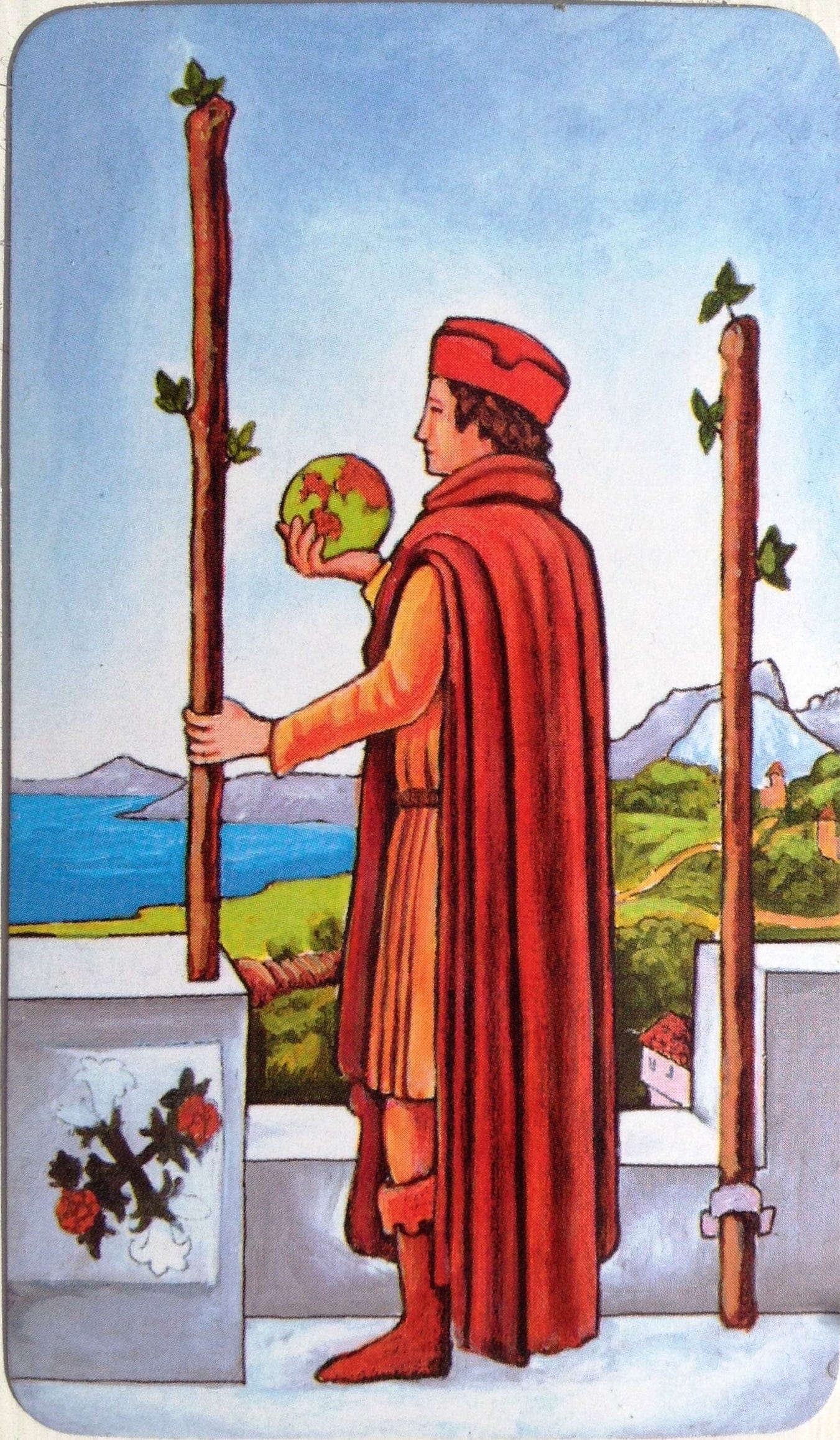
In the archetypal imagery of the tarot system—originally a card game invented in the Renaissance using lots of Catholic imagery—the Two of Wands, in the Rider-Waite series, depicts a figure standing between two “wands” (tall wooden beams), holding a globe, and looking out over a vast landscape. Interpretations of the cards vary, often reflecting the personal experiences of each interpreter.
In tarot, the suit of wands typically represents the element of fire, harkening motifs of energy, passion, creativity, willpower, and taking action. Themes include inspiration, ambition, growth, spirituality, and how one channels one’s drive into the world.
In my interpretation, the Two of Wands archetype depicts someone whose spiritual energy has led them into a glimpse of Sophia, the divine wisdom and divine poesy at the heart of creation. The tradition of sophiology—found in Jewish, Protestant, Catholic, and Orthodox traditions (and others as well, most likely)—speaks of God’s wisdom as an animating and life-giving force within creation. Sophia is not a fourth member of the Godhead but rather more akin to the divine wisdom of God and the “World Soul” of creation (a term used by Plato but reiterated by Orthodox theologians like Bulgakov). This spiritual foundation and animating principle at the heart of our world enables all creation to relate to God. Even though the world is marred and distorted by sin, the light of Sophia still shines through, and when one is properly attuned, the destiny for final redemption and restoration can still shine through even the blade of grass, the caterpillar, the tiger, the bat, and the person walking down the street.
The figure in the Two of Wands has seen through the gateway and beheld a vision of this sophianic principle. Notice how he stands between the two wands (symbols of one’s heart or spiritual energy) like someone passing through a gateway—i.e., his soul is being initiated into a deeper vision of reality. And in his hand, he holds a globe. In the context of this essay, one can symbolically read this globe as the World Soul of Sophia, which is helping him gain an awareness of the divine interconnection of creation and relate to its spiritual foundation. He is connected to the planet (symbolized by the natural landscapes around him) and the divine. And with a hopeful look on his face, he is ready to pursue wisdom.
I mention the Two of Wands because I think this archetype captures what utopian scholasticism, at its best, is all about: the hopeful, sophianic dimension of learning that leads to wonder.
The atmosphere generated by utopian scholastic—whether in a physical location or through visual media—creates a place where learning is filled with wonder, awe, and beauty. The world is opened up in magic and whimsy as the divine light of Sophia illuminates one’s mind, and the world unfolds like finding a precious treasure. Even though it might be describing ‘lower’ facts rather that Ultimate Truths—and it often sticks to the empirical, “horizontal” world rather than metaphysics or theology—the aesthetic framing situates these facts as pointing toward a deeper or transcendent reality.
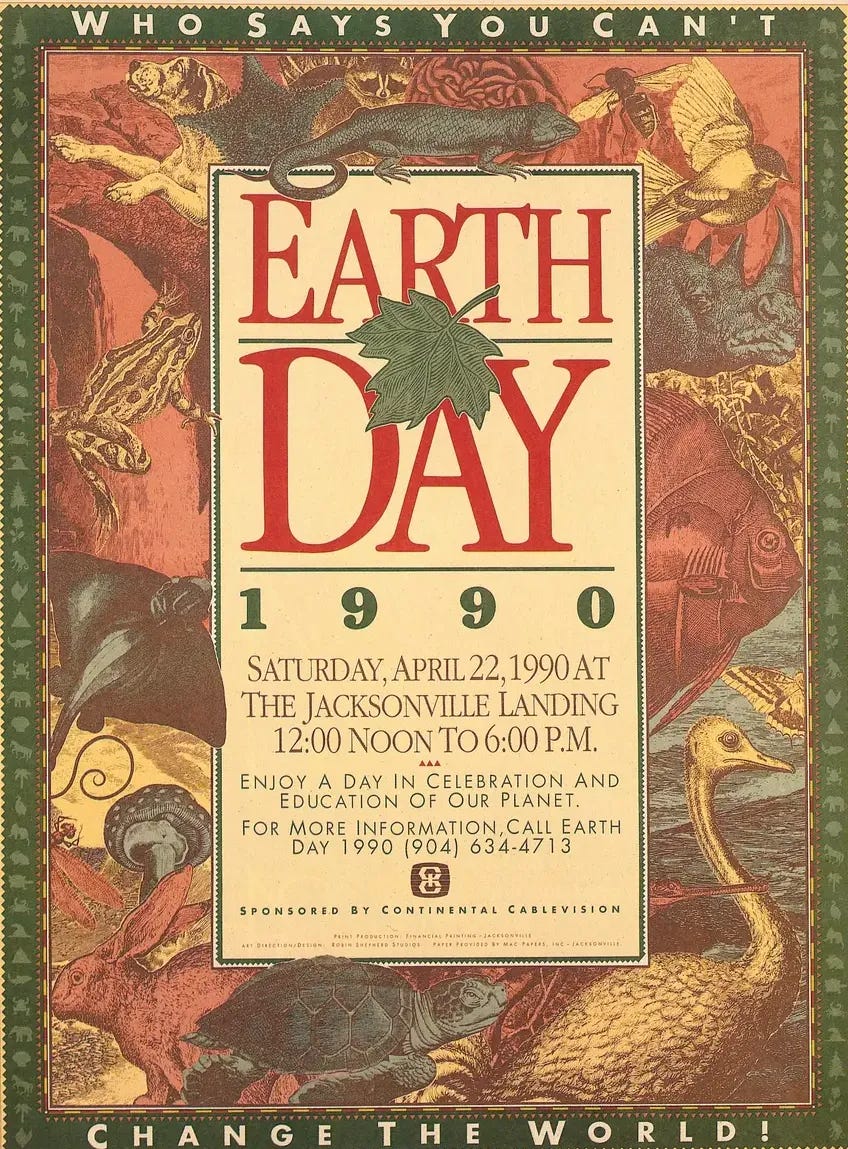
However, even beyond the world of science and history, utopian scholastic does not merely stick with empirical facts, but also opens one to the world of mythology, fantasy, folklore, and imagination. For many kids, children’s encyclopedias borrowed from their school library or exhibits at a museum are the first place they learned about ancient mythologies.
The Utopian Scholastic aesthetic invites the learner to engage both nous—the aesthetic and imaginative dimension of knowledge—and logos—the rational and logical dimension of understanding. This dual engagement is essential for holistic learning: we need both the poetic, intuitive grasp of truth and the analytical, systematic approach. This is why the Scholastic Book Fair was (and still is) a kind of sacred space, something like a folk holiday for schoolchildren in the United States. Entering it, one passes through a threshold into the realm of the imaginal. Rationality, creativity, and imagination appear not as opposing faculties but as companions on the same path of learning—which is evident in the use of surrealism (the combination of rationality and dream into a higher, sur-reality). Through the harmony of nous and logos, the learner comes to experience education as an opening of the soul to the divine wisdom of Sophia.
This is not to say that the utopian scholastic aesthetic portrays the world as valuable only insofar as it points toward another realm. Rather, the beauty and care in its artistic framing allow things to appear in their own integrity—much as Buddhist teachings (especially in Zen koans) allow things to be what they are, neither diminished nor inflated. In these teachings, the language often seems tautological—saying the same thing twice in different words—but this is intentional. The koan does not aim to push one toward idealization or apathy, but toward a direct encounter with reality and its deep interconnectedness with all beings.
A mountain, then, is not merely a pile of rocks, nor a god, but a mountain—radiant in its wonder and haecceity, its particular “this-ness” and irreducibility. To perceive this is to recognize one’s own interconnection with the mountain, to see how one’s life is conditioned and enlivened by its presence in the world.
The method of communication within utopian scholastic aesthetic utilizes a similar framing that allows things to be what they are. A fish is not merely a fish (i.e., a boring, depersonalized, mundane object), nor is it something other than a fish (a monster or an anthropomorphic cartoon). The fish is encountered precisely as a fish. But this encounter retains its sense of otherness rather than projecting one’s own epistemic systems onto it—conditions one toward an I-Thou relationship, which is necessary for working toward the liberation, salvation, or enlightenment of all beings.
The term “I-Thou” is a phrase used by the philosopher Martin Buber to denote a personal relationship with another being, in contrast to an “I-It” relationship where we treat others as objects to be used. When we encounter a fish through utopian scholastic framing, we are invited into an I-Thou relationship—seeing the fish as a fellow creature with its own dignity and purpose, rather than merely as data or spectacle. This relationality opens us to compassion and interconnectedness, helping us recognize that the flourishing of all beings is bound up together.
I have a distinct memory of being around 6-8 years old and watching a documentary about fish that was made for kids that my mom got for me at the library. It was an Eyewitness company documentary, which can still be viewed on YouTube. I can still remember learning about the life of salmon and what they do in order to lay eggs. They travel up the stream of rapid waters, through the threat of bear and hawk attacks. At the end of their journey, after laying their eggs, the parents fish are so exhausted that they pass away. It is a total sacrifice in order to give birth. The narrator describes it as follows, as a music score reminiscent of Saint-Saens’ “Aquarium” score:
“After spawning, many of these adults will drift exhausted downstream to die. But their eggs will hatch, and the life cycle begins anew, like Pisces rebirth. The fish echoes our own birth—our own earliest ancestor, ruler of a world greater than our own and still far beyond our reach.”
I remember crying during this documentary while watching it as a 7-year-old. Notice the multi-faceted elements and poetic description used to convey the information: lament for the dead, the hope of new life, connection to a cosmic archetype, harkening back to the mysteries of the planet’s deep history and our own birth, and finally ending with us standing at the threshold of the Mystery at the heart of our existence. This is masterful work, which alone is an achievement itself, but the cinematography, editing, and music score bring it to the next level. I still feel moved all these twenty-something years later.
The framing and communication struck an incredible balance of conveying facts without falling into the mundane (e.g., “a fish lays eggs and dies”) and neither did it excessively anthropomorphize the fish either (e.g., a ‘disneyfication’ of the non-human animals). However, I was still reduced to tears. My child self felt an I-Thou encounter with the fish, a sophianic response. I still believe this holds an important message for us today: When we truly encounter, e.g., the salmon’s sacrificial journey as an I-Thou moment, we naturally feel moved toward protecting and honoring such creatures, not out of abstract duty but from genuine relationship and care.
This is not to say that everything we learn needs to make us cry. I would actually be quite miserable with that because I’m a sensitive butterfly already. But it would be totally possible to change the aesthetic framing of that documentary learning experience to cultivate something other than an I-Thou encounter. The same subject matter treated with an MLG-edit aesthetic or a 2000s ‘edgy’ and ‘extreme’ Discovery Channel documentary (”Worlds Most Dangerous Journeys!” *cue electric guitar riff) would reduce the fish to mere spectacle, like a gladiator in the arena. By contrast, utopian scholastic is not seeking the spectacle of shock, but actual education.
The Death of Utopian Scholastic
Eventually, the beauty of utopian scholastic gave way to the edgy and attitude era of the 2000s. Many reasons for this exist—chiefly amongst them being the collective cultural trauma of a post-9/11 world. There is a great article by Christopher Moreland, which you can read here, about some of these themes. Regardless of the material conditions giving rise to the change, the 2000s attitude era gave the final death blow to utopian scholastic because values like sincerity and earnestness were considered cringeworthy and lame. Edgy and irreverent humor was king, like a child gleefully grossing out their parents by showing the chewed-up food in their mouth. In this context, presenting sincere, educational content made with love and sincerity was the opposite of edgy. Calm, meditative, and poetic fell way to shock and extreme.
A prime example of this change is seen in the massive hit, Man vs. Wild, a reality TV show on the Discovery Channel. The show followed Bear Grylls, a former member of the British special forces and self-described “survival expert” (although that’s not actually true), who would go into some of the most hostile environments in the world and show how to survive. The camera crew would film him performing various feats of survival. These would sometimes be mundane, such as starting a fire or building a shelter. But he gained his fame primarily through the more shocking and extreme stunts, such as eating bugs, killing fish with his bare teeth, drinking his own urine out of the skin of a snake he killed, eating raw intestines, drinking fluid from elephant dung, and other examples that actually get even more disgusting than this. The aesthetic framing of these moments was always played up to the most extreme and shocking dimensions possible, almost better fitting for a show like Fear Factor (another form of reality show shock media) than a documentary. Such extreme aesthetic framing is even hinted at in the title: Man vs. Wild. Ecosystems are portrayed as radically 'other than “man,” who must overcome its ferocity with equal strength and cunning.
Importantly, Man vs Wild was self-described as an educational show. It was meant to teach about surviving in nature. Of course, hardly anyone would actually be encountering these scenarios described by Grylls. Likewise, the show has been heavily criticized by most survival experts for often doing the opposite of what one ought to do in such situations. Grylls staged most of his experiences in order to present survival as a type of extreme sport rather than true education. By contrast, he shocking and deliberate gross-out cinematography is a world apart from the beauty of utopian scholastic’s aesthetic framing. The show eventually lost this “educational” framing and devolved into memes and pastiche, such as Grylls taking celebrities on journeys with him.
I know it sounds like I’m being overly contemptuous of Bear Grylls. I don’t mean to be a hater. In fact, there are actually lots of positive aspects, which, in my opinion, make the show more tragic. To start, Bear Grylls has done a great deal of advocacy for conservation. In an interview about climate change, Grylls said the following:
“We see so many people debating climate change. ‘Is it real? How bad is it, really?’ Obviously, the best way is to let the animals tell the stories. It’s heartbreaking – really heartbreaking. I don’t often have tears when I’m taking people out on the other shows, but to see these animals? Really heartbreaking.”
This quote shows a depth of compassion and concern that is really great to hear.
Moreover, it’s undeniable that Grylls has an electrifying and captivating charisma. His presence on camera is incredible, and the way he can hold an audience is a skill that few people have. Even though much of what he taught was incorrect, his ability to communicate information as a teacher was highly successful. I still remember things that he taught in Man vs. Wild all these 22 years later.
What makes all this tragic, to me, is that if Bear’s charisma, camera presence, and passion for conservation could be enacted in a different aesthetic medium—such as utopian scholastic—then all of his positive qualities would be taken to the next level. Imagine what a utopian scholastic television series could have been like hosted by Bear Grylls.
Unfortunately, it seems that the media machine of the 2000s co-opted Grylls’s natural charisma and courage. Sure, he probably shoulders some blame for consenting to participate, but it’s not surprising he did so, given the drastically changing social climate of that era. The tragedy lies in how his genuine courage and compassion were repackaged into spectacle. In place of wonder, the audience was given adrenaline; in place of communion with nature, domination over it.
What Man vs. Wild could have been—had it embraced the contemplative rather than the sensational—shows precisely why a utopian scholastic aesthetic is needed: to remind us that learning and adventure, like faith and imagination, belong together.
Frutiger Aero: The Tragedy of False Promise
However, not everything in the 2000s was meant to be offensive and extreme. Currently, many online are reminiscing about an aesthetic that has been subsequently named “Frutiger Aero” (in reference to the creator’s name and a particular type of font). The aesthetic was featured heavily in technology advertisements and the digital atmospheres of computer backgrounds and gaming consoles like the Nintendo Wii. However, the aesthetic also made its way into real-life design, creating warm, sleek, clean environments filled with water and plants.

The aesthetic—especially in the subgenre “fruitger eco”—conveyed a vision of technology that is quite foreign to us today: a world where technology would not overtake us, but rather coexist alongside of and even amplify our world. Computers and forests, digital environments and oceans, could all live in harmony. It was a utopian dream promised to many, which ultimately proved to be a false promise, with technology—especially social media—completely overtaking the physical world around us. Ironically, the truest incarnation of Frutiger Aero/Frutiger Eco was the 2016 summer of Pokémon Go. People spent ample time outdoors, made friends with strangers, had their imagination sparked, and even got a little exercise because of Pokémon Go. Technology, nature, social interaction, and geography all existed in relation to one another. The app was perfect because it was a digital device that encouraged one to go out into the real world, with technology enabling and enhancing experiences outside of the digital space. This ought to be the goal of most technology, and it is the opposite of almost all functions of social media, which are designed to keep one sequestered to an online space rather than the external world.
Though Frutiger Aero is certainly a vast improvement over the nihilistic corporate minimalism and quasi-dystopian aesthetics we have today, it seems to me that Frutiger Aero failed in one area that utopian scholastic got (mostly) right. After the edgy era shattered the earnest spirit of edutainment, the door was opened for technology to be the new form of wonder. Rapid technological development was dazzling and exciting, but technological growth is not enough for true flourishing. The aesthetic promised harmony between nature and technology, but it lacked the deeper wisdom traditions and I-Thou relationality that utopian scholastic cultivated. Without earnest engagement with virtue, meaning, and interconnectedness, Frutiger Aero became merely a pleasing veneer—beautiful surfaces masking an emptiness at the core of how it was used in society. We were promised a beautiful new world, but lost sight of the virtues, beauty, and sense of wonder that are necessary for us to get there.
My critique is aimed more at the changing material and social context than Frutiger Aero’s aesthetic itself. One could surely use Frutiger Aero to inspire wonder and cultivate meaningful I-Thou encounters with the world. But it’s as if this potential was never fully realized, and instead funneled into mere technological growth. The future we were promised was discarded when we realized it was no longer needed to make money.
The situation has proven much worse, now with social media becoming the primary “aesthetic” contextualization for our discourse. It seems to me that when people complain about “wokeism”—which at this point is a term that almost has no meaning—what they are really complaining about is a mode of learning that is thoroughly conditioned by social media reaction-triggering discourse. I’m all for learning about decolonism, post-colonialism, the history of racism, its impact people living in the present, etc. This is information that is invaluable to everyone. But I don’t think the medium of social media is one that can contextualize this information in the best mode. Such conversations need to be grounded in love, beauty, and compassion, and the outrage-baiting algorithms of social media—where more “extreme” reactions garner more engagement—are not conducive to the care which those conversations deserve. We need something more.
Though utopian scholastic had its own problems (which I plan on discussing in a subsequent post where I focus on museum atmospheres in more depth), I think the heart of it carries a necessary tool for us today. Though we might not be able to simply repeat a past aesthetic, we can still learn from its integration of nous and logos, grounded in beauty and cultivating an I-Thou encounter, to forge a new path forward.
Conclusion
This essay has explored how utopian scholastic aesthetic cultivated I-Thou encounters with the natural world through sincere, poetic educational content—a tradition that was largely displaced by the edgy attitude era of the 2000s. Perhaps by recovering the best elements of utopian scholastic—its earnestness, its careful aesthetic framing, its cultivation of wonder and interconnectedness—we might find a path forward that truly honors both the dignity of all creatures and our responsibility as learners in this vast, mysterious world.
I do not paywall any of my content. I want everything to remain free for any readers because my hope and prayers is that what I write will be a benefit and blessing to others on their journey. However, if you wish to support the work I’m doing, you’re welcome to give me a small, one-time 5 dollar donation at buymeacoffee.com
Bookmarking for later. I love this aesthetic. Important imagery of my childhood and upbringing.